
Tucker, GA · Garage Door Service
Is Your Old Garage Door Worth Fixing, or Time to Replace It
Tucker's housing runs mostly 1960s-70s. We break down when a torsion spring repair beats replacement and what the cold-moderate climate here does to steel doors.
- Repairs & new doors
- Springs & openers
- Serving 5 nearby communities
When Waiting Is Fine
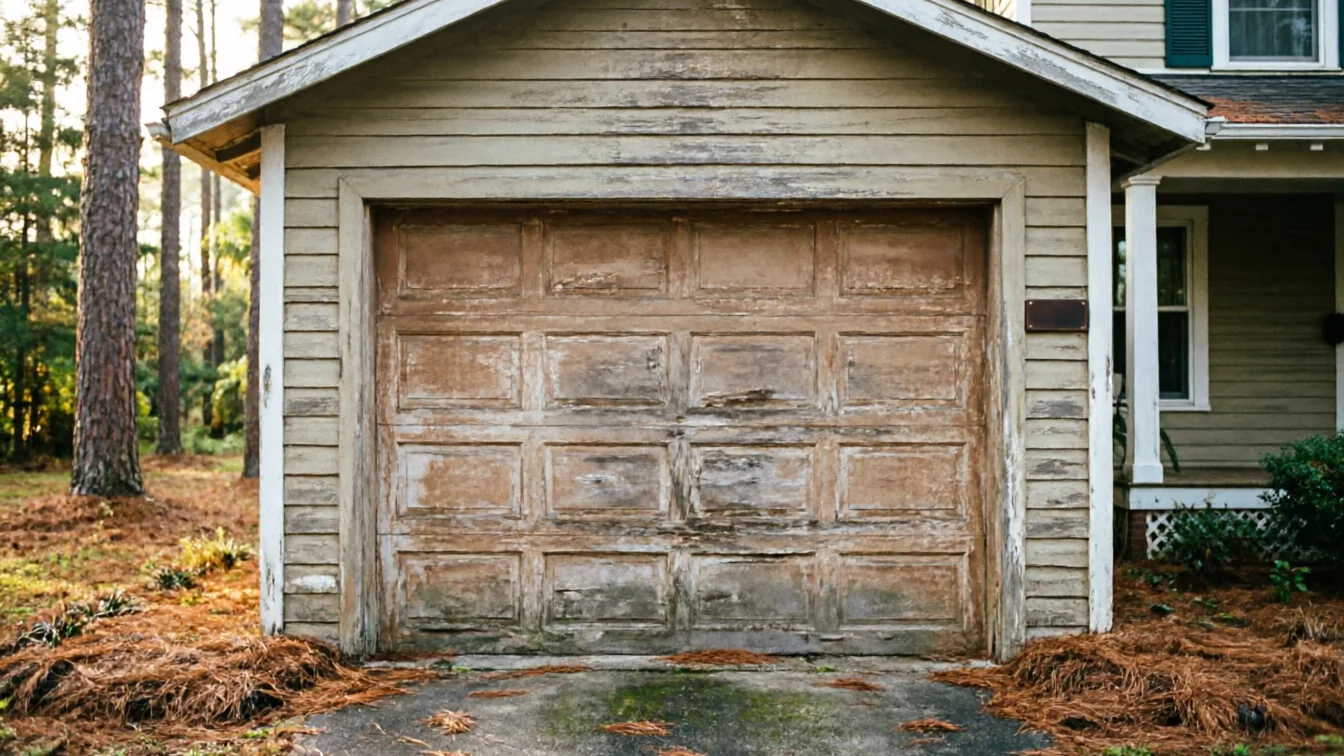
Not every noisy or slow door is an emergency, and not every repair needs to happen this week. If the door still opens and closes on its own power, if the spring hasn't snapped, and the only symptom is a rattle or a slow roll, you can usually wait a few weeks to get it looked at. A lot of the doors we see in Tucker are original or close to original equipment on houses built in the 1960s and 70s, and a door that age can run for years with minor wear before it actually fails. Hardware that's been cycling since the 1970s develops predictable symptoms first: a dry roller squeals before it jumps the track, a worn cable frays visibly before it snaps. If you're hearing a new sound but the door still tracks straight and closes level, that's a schedule-it-in job, not a drop-everything job. Where you shouldn't wait: a spring that's already popped, a door that's off one track, or an opener that's grinding under load. Those get worse fast and can put a panel or a finger at risk. The honest answer is that waiting costs you nothing on a door that's still behaving - it just means catching the actual failure before it happens instead of after.
The Situation
Tucker's housing stock runs from 1951 up through 2012, but the median build year lands at 1974, and the bulk of what's on the ground across this part of DeKalb County - the stretch that includes Clarkston, Stone Mountain, Scottdale, Avondale Estates, and roughly twenty other named areas within a few miles - is 1960s and 70s construction. That matters because garage doors from that era were almost always steel panel doors on torsion springs mounted on a single center shaft, not the extension-spring side-mount setups you see on some newer builds, and not the lighter aluminum sectional doors that became common after 2000. A torsion spring rated for a given number of cycles doesn't care how old the house is around it - it cares how many times it's been wound and released. On a door installed when the house was built in the early 70s, that spring has had five decades to work through its rated life, get replaced once or twice, or never get touched at all. We see all three. The practical upshot for anyone in this area: if nobody's touched your spring system since the house changed hands, or since you moved in, it's worth having someone check the wind and the cable condition before it tells you itself by snapping.
What It Costs
We don't have a published price list to hand you here, and giving you a number without seeing the door would be a guess dressed up as a fact - that's the one thing we won't do. What we can tell you is what drives the cost up or down. A single torsion spring swap on a standard door is the cheapest fix there is. A door with two springs, worn cables, and a dented bottom panel costs more because you're now pricing parts plus labor plus the time to source hardware that matches an older track system. Replacement makes sense when the door itself - the panels, not just the spring - has rusted through or warped, because at that point you're paying repair money toward a door that's still going to look and perform like a forty-year-old door. With a median household income of $70,101 across this service area, most of the calls we get are from owners weighing a modest spring repair against a full replacement, not choosing between trim packages. That's the real decision: fix the part that broke, or stop patching a door that's nickel-and-diming you.
What the Weather Here Does to It
Tucker sits in a cold-moderate climate band, which means winters cold enough to matter but not brutal, with real freeze-thaw cycling through the cold months. That cycling is harder on steel garage doors than straight cold or straight heat would be, because the metal contracts overnight and expands again by afternoon, over and over, all winter. On a door from the 1960s or 70s stock that makes up most of this area, that repeated flex is what eventually work-hardens the torsion spring coils and loosens the roller brackets - it's metal fatigue, not rust, that gets most of these older doors first. Steel panels also sweat on the inside face during temperature swings, and on an unfinished garage that moisture sits on the bottom panel longer than it would on a sealed one, which is where you'll see rust bubble up first on an older door. None of this is dramatic weather - no named storm, no flood event - it's just ordinary seasonal cycling doing slow damage to hardware that's already decades into its working life. That's worth knowing before you assume a sudden failure came out of nowhere.
Frequently asked questions
How do I know if my spring is original to the house?
If the house was built in the 1960s or 70s and nobody in your ownership history mentioned replacing it, treat it as original until proven otherwise. A spring that old has likely been rewound or has worn well past its rated cycle count, so a visual check for flattened coils or gaps between windings is worth doing before it fails on its own.
Is it worth fixing a door from the 1970s instead of replacing it?
Usually yes if the panels are sound and the problem is hardware - springs, cables, rollers, the opener. It stops being worth it once the panels themselves are rusted through or the track is bent, because at that point repair money is going toward a door body that won't last regardless.
Does the cold weather here actually damage garage doors?
Yes, through repeated freeze-thaw flexing rather than any single harsh event. Tucker's cold-moderate climate puts steel panels and torsion springs through daily expansion and contraction all winter, and that cycling is what tends to fatigue older hardware first, well before rust becomes visible.
Related garage door services in Tucker
More garage door guides
Book garage door service in Tucker
Call now or request a quote - tell us what the door is doing and where you are.