
Tucker, GA · Garage Door Service
Tucker Garage Door Repair Calls We See Most
Tucker Garage Door Pros fixes springs, openers, and tracks on the 1960s-70s doors common across Tucker's older subdivisions near Stone Mountain and Clarkston.
- Repairs & new doors
- Springs & openers
- Serving 5 nearby communities
How It Shows Up
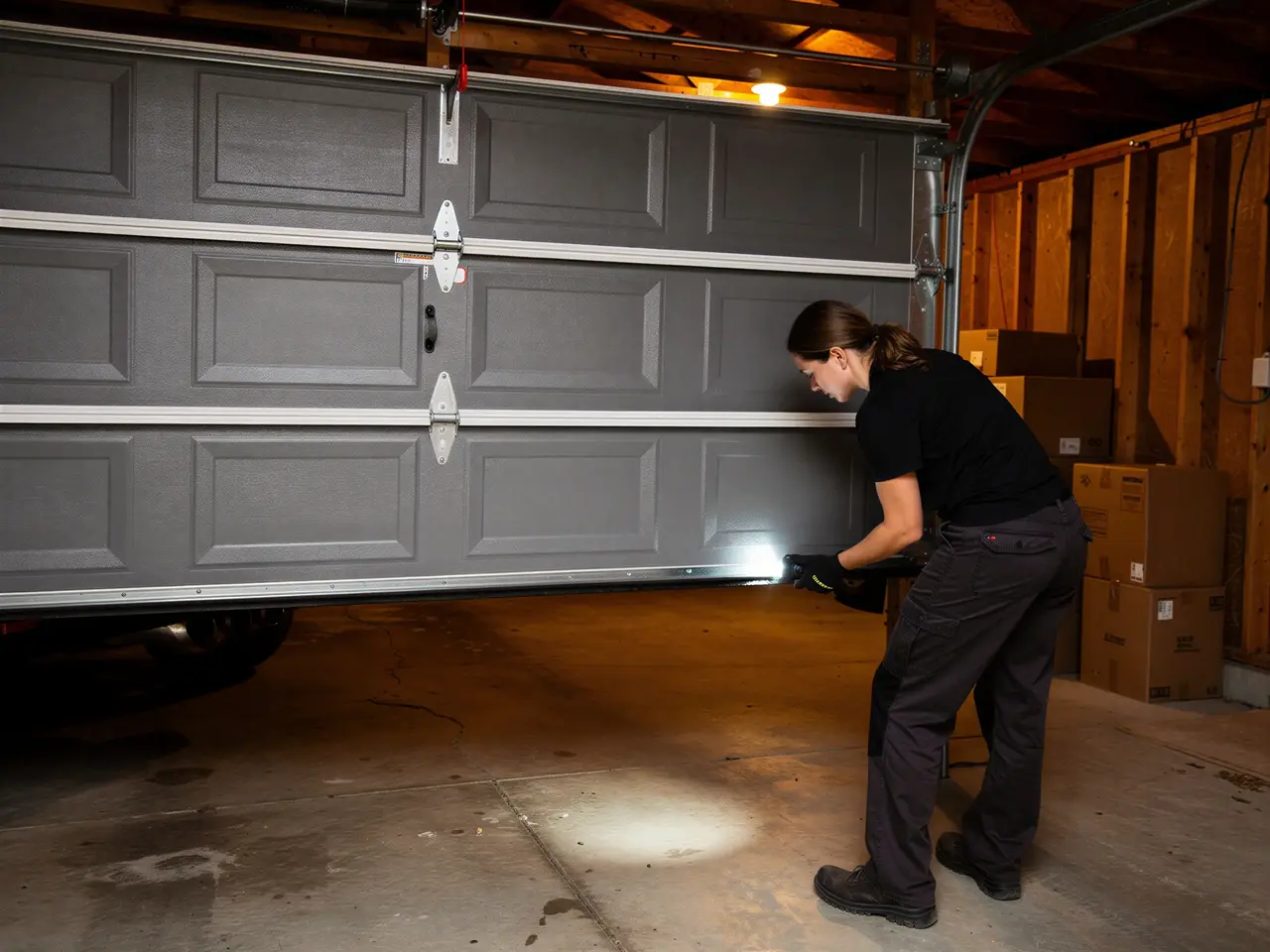
Most of the calls we take in Tucker start the same way: the door sticks halfway, the opener grinds but the door doesn't move, or one side drops faster than the other. That pattern isn't random. Housing in this part of the county was built mostly between 1951 and 2012, with the median year sitting around 1974, and a lot of the streets in and near Tucker still carry the original one- and two-car garages from that build-out.
Doors from that era used lighter-gauge track and torsion hardware that wasn't designed for forty-plus years of daily cycling. When a spring finally gives on one of these, it's usually the original spring, not a replacement - and it tends to go on a door that's been dragging for months first, which is why owners describe it as 'sudden' when it really wasn't.
We see this across the older pockets near Clarkston, Stone Mountain, and Scottdale, where the same subdivisions went up around the same years. A door built in 1974 and a door built in 1974 three miles apart fail the same way, for the same reason - it's the hardware generation, not the house.
What the Repair Takes
For a torsion spring job on one of these older doors, the work is straightforward but not quick: winding bars, a drop-in replacement sized to the door's actual weight (not whatever's left on the shelf), and a check of the drums and cables while the spring's off, since cable wear usually tracks spring wear on a door this age.
Openers are a separate problem. A lot of these houses have had at least one opener swap already, often a chain-drive unit bolted onto rail that predates it. When the rail and the opener don't match, you get the grinding-but-not-moving symptom, and the fix is matching the unit to the door, not just dropping in a new motor.
Track alignment is the third piece. Original track on a 1960s-70s door was hung with fewer brackets than current code calls for, so after decades of settling, a slight racking in the frame throws the whole track out of square. We re-hang and shim rather than force the door to run on a track that's fighting the frame - that's a half-day job, not a twenty-minute one, and we tell owners that upfront.
Why This Fails Locally
Tucker sits in a cold-moderate climate band, which means the metal in these doors goes through real expansion and contraction every year, not the mild swing you'd get somewhere with a flatter temperature curve. That cycling loosens the lag screws holding track brackets to framing that, on a house from the 1950s-70s stock common here, was never over-built to begin with.
Combine that with the age of the stock - median build year 1974 - and you get a specific failure chain: the bracket loosens, the track shifts a few degrees, the door starts dragging on one side, and the owner compensates by leaning on the opener instead of the door. That's what finally burns out the opener's drive gear or snaps the original spring.
This isn't a universal garage door problem. It's what happens when a door built for a lighter-duty era sits in a region that puts real thermal stress on the hardware every winter. Newer builds in the area, where they exist, don't show this pattern nearly as often - it's concentrated in the older sections.
Booking a Visit
If your door is dragging, grinding, or sitting crooked in the opening, that's worth a look before it becomes a stuck-door call on a Saturday. We go out, check the spring, drums, cables, and track together rather than quoting a spring swap over the phone and finding the real issue once we're there.
One honest limit: if your track brackets are pulled loose from rotted or shifted framing, that's a carpentry fix first - we won't rehang a track onto wood that won't hold a lag screw, and we'll tell you that instead of forcing a patch that fails again in six months.
You can see the rest of what we handle on our home page.
Frequently asked questions
Why do so many Tucker garage doors need spring replacement around the same age?
Most houses in this area were built between the 1950s and 1970s, with a median around 1974, so a large share of doors are running original or first-generation hardware. Torsion springs have a cycle life, and doors from that build era are now well past it, which is why failures cluster by house age rather than by individual bad luck.
Is it the opener or the door when the garage door grinds but won't move?
On older Tucker doors it's often both - a worn opener drive gear straining against a door that's already dragging on a shifted track. We check the track and spring tension before touching the opener, because replacing the motor alone on a door that's still binding just repeats the failure in a shorter time.
Do you work on doors near Stone Mountain and Clarkston too?
Those areas sit a few miles from Tucker and share the same 1960s-70s housing stock, so the same failure patterns - loose track brackets, original springs, mismatched openers - show up there as well. We service that broader area, not just the Tucker zip code itself.
Will cold weather actually affect my garage door hardware?
Tucker's climate band is cold-moderate, which means real seasonal temperature swings rather than a flat year-round range. That cycling loosens lag screws and bracket mounts over the decades, which is a bigger factor in track misalignment here than most owners expect.
Related services
Related guides
By Neighborhood
Garage Door Repair across the Tucker area
We also handle garage door repair in these Tucker-area suburbs.
Book garage door service in Tucker
Call now or request a quote - tell us what the door is doing and where you are.