
Tucker, GA · Garage Door Service
What a 1974-Median Housing Stock Means for Your Garage Door
Tucker homes built 1951-2012, median 1974, often carry uninsulated steel garage doors. Here's what that means for cold-weather performance and when to fix versus replace.
- Repairs & new doors
- Springs & openers
- Serving 5 nearby communities
When Waiting Is Fine
Not every door problem in Tucker needs a truck out today. If your door is from the original build and it's just noisy or slow, that's often a lubrication and hardware issue, not a structural one. Houses here went up between 1951 and 2012, with the median landing around 1974 - meaning a lot of doors on the road are either original single-layer steel slabs or a first-generation replacement from the 80s or 90s. Neither of those needs panic treatment for cosmetic dents, minor track rattle, or a slightly uneven close. What does need attention sooner is anything touching the spring system or the bottom seal once cold weather sets in, because those parts fail fast once they start failing. If the door still opens and closes square and the opener reverses properly on contact, you can usually schedule a repair instead of an emergency call. We'd rather tell you to wait than run a bill you didn't need.
The Situation
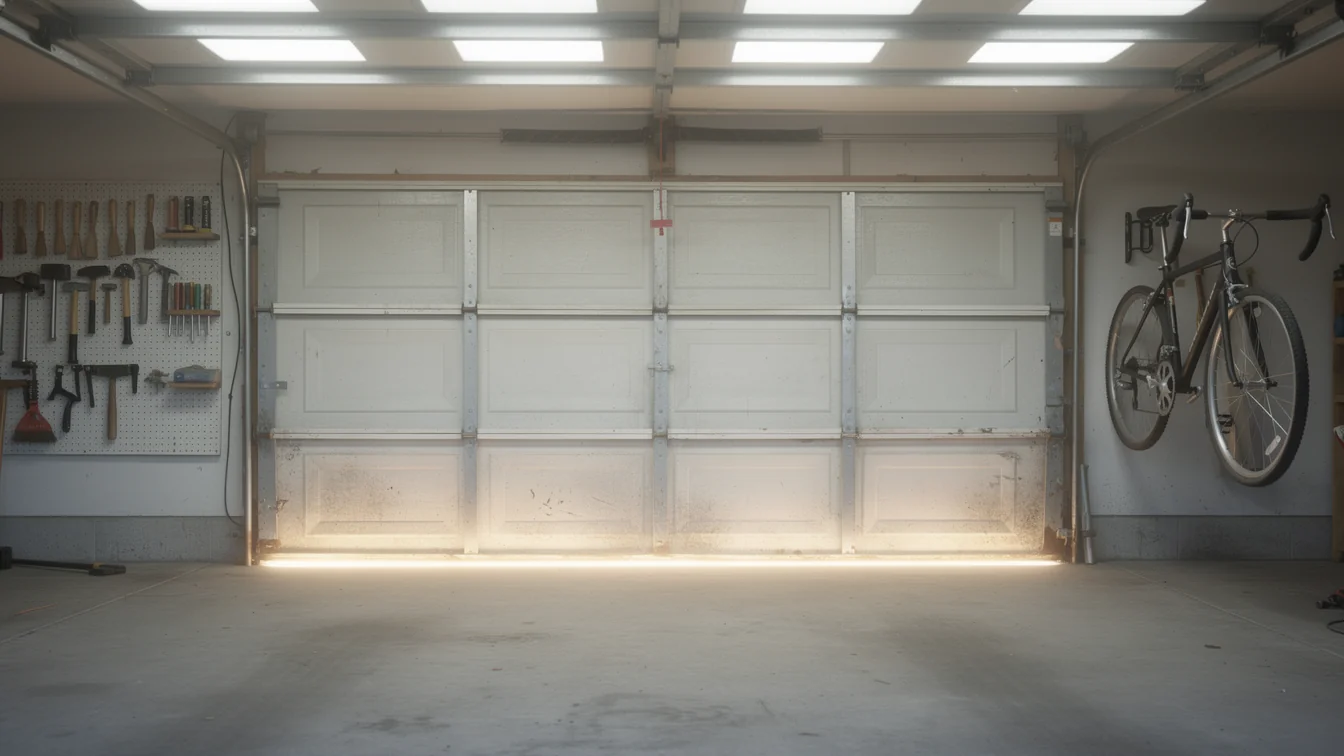
The core issue in Tucker is timing. Insulation requirements for garage doors weren't standard when most of this area's houses were built - median year 1974, with construction stretching back to 1951. That means a large share of the doors on houses across Clarkston, Stone Mountain, Pine Lake, and the rest of this stretch are either uninsulated single steel skin or a thin retrofit layer added later, not true sandwich-panel construction. These doors do the job structurally but they're a straight thermal bridge: whatever the garage air is doing, the door barely slows it down. On an attached garage that shares a wall with living space, that matters more than people expect. It's not a defect - it's just what building standards looked like when these neighborhoods went up, decades before insulated doors became the norm. Recognizing that is the first step in deciding whether to patch what's there or move to a door built for a wall assembly that exists today.
What It Costs
We don't have a price list to quote here, and giving you a made-up number would do you more harm than good - every door, opener, and spring size prices differently, and a slab swap versus a full insulated replacement are two different jobs entirely. What we can tell you is how to think about it: a torsion spring replacement on an original-era door is usually the smaller job; swapping a 50-year-old uninsulated slab for a current insulated panel is the bigger one, and it changes your energy bill as much as your garage. With median household income in this area around $70,101 and most owner-occupied homes carrying a door that predates insulation standards, a lot of Tucker calls end up being this exact decision - repair the door you have, or replace it with something built for how the house is actually used now. Call and we'll look at your door specifically before either number gets thrown around.
What the Weather Here Does to It
Tucker sits in a moderate cold climate band, not the deep-freeze end of the map, but still cold enough that an uninsulated steel door tells you about it. On houses built in that 1951-2012 window with original or early-replacement doors, you'll see condensation on the inside face on cold mornings, a draft along the bottom seal that a newer door wouldn't have, and panels that feel noticeably colder to the touch than the rest of the wall. None of that is damage by itself, but it accelerates rust at the bottom panel edge and it stiffens up roller and spring lubrication faster than a conditioned space would. If your garage backs onto a bedroom or laundry room, that thermal bridge is doing real work against your heating bill every winter, not just an inconvenience in January. It's one of the clearer signs that a door's age has caught up with the house around it.
Frequently asked questions
Is my garage door too old if my house was built in the 1970s?
Not necessarily broken, but likely uninsulated. Median home construction in this area is 1974, well before insulated garage doors were standard, so a door from that era is almost always a single steel skin. It can still function fine - the question is whether it's doing you any favors on heating costs or condensation.
Should I insulate my existing door or replace it?
Depends on the door's condition and hardware. A retrofit insulation kit helps a sound panel on an original-era door, but if the slab is dented, rusted at the bottom, or the springs are original too, replacement with a built-insulated door usually makes more sense than layering a fix onto aging parts.
Why does my garage door sweat in winter?
That's condensation forming where warm, humid garage air meets a cold uninsulated steel panel. It's common on original doors from houses built before insulation rules were standard, and it's a sign the door isn't doing much to slow heat transfer, not a sign something's broken.
Related garage door services in Tucker
More garage door guides
Book garage door service in Tucker
Call now or request a quote - tell us what the door is doing and where you are.